Play Solitaire Turn 1 Online for Free (No Download Required)
Welcome to the most popular card game in the world. Klondike Solitaire
turn one, also known as Patience or simply Solitaire, has been a beloved
pastime since the late 19th century and was famously included in Windows 3.0. If you enjoy comparing different versions, you can also play turn-one Klondike at Online Card Games.
How to Play Classic Klondike Solitaire Turn One
Klondike is played with a standard 52-card deck. The goal is to build
four foundation piles, one for each suit, from Ace (lowest) to King
(highest).
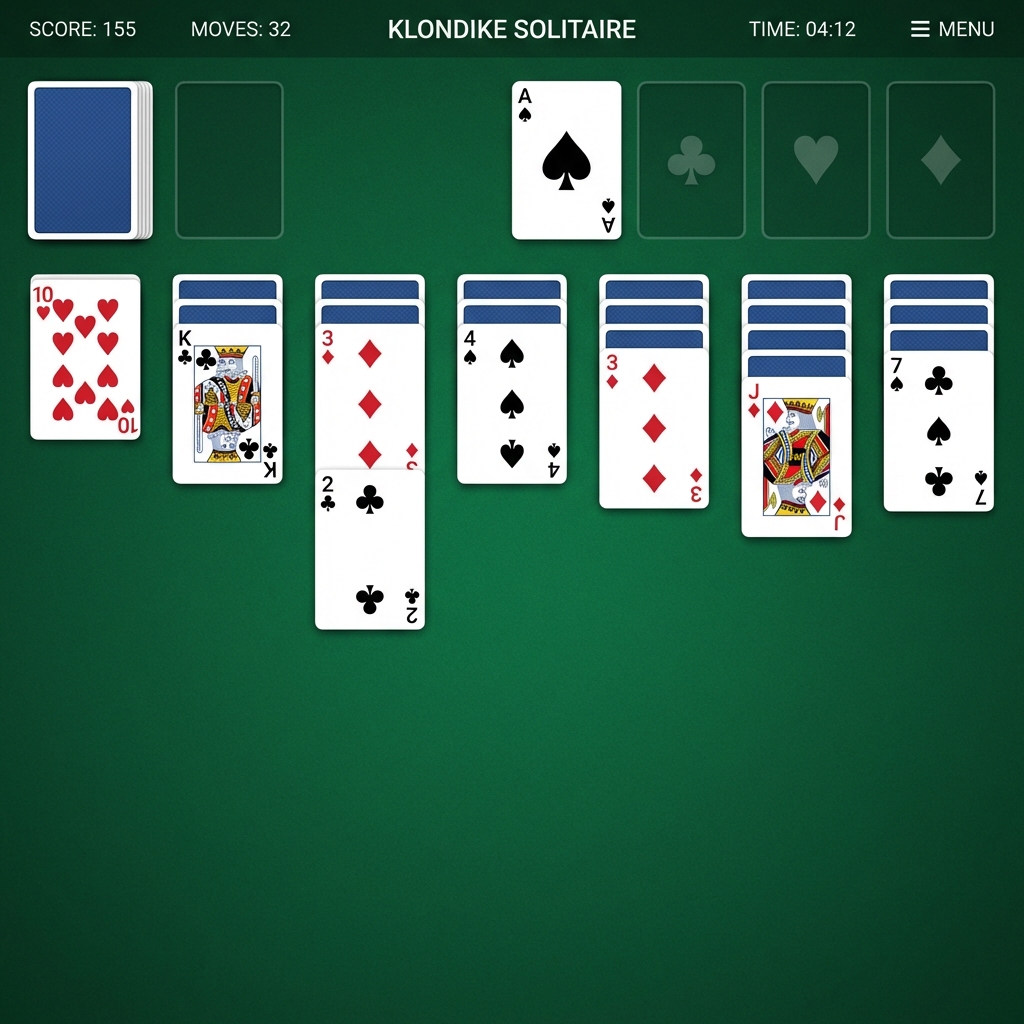
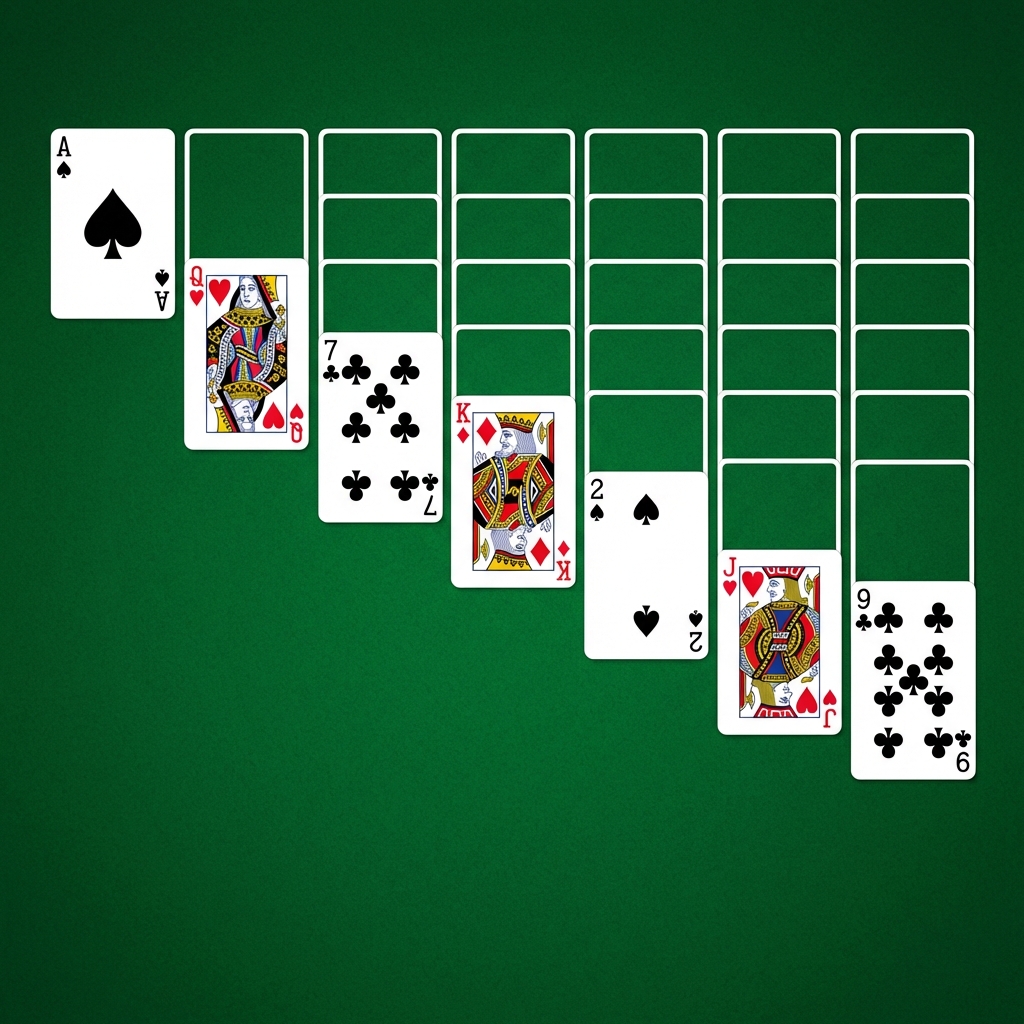
Seven columns of cards are dealt in a triangular pattern. The first
column has 1 card, the second has 2, and so on up to 7 cards. Only
the top card of each column is face-up. Build tableau columns in descending order with alternating colors (red on black, black on red).
The Stock and Waste
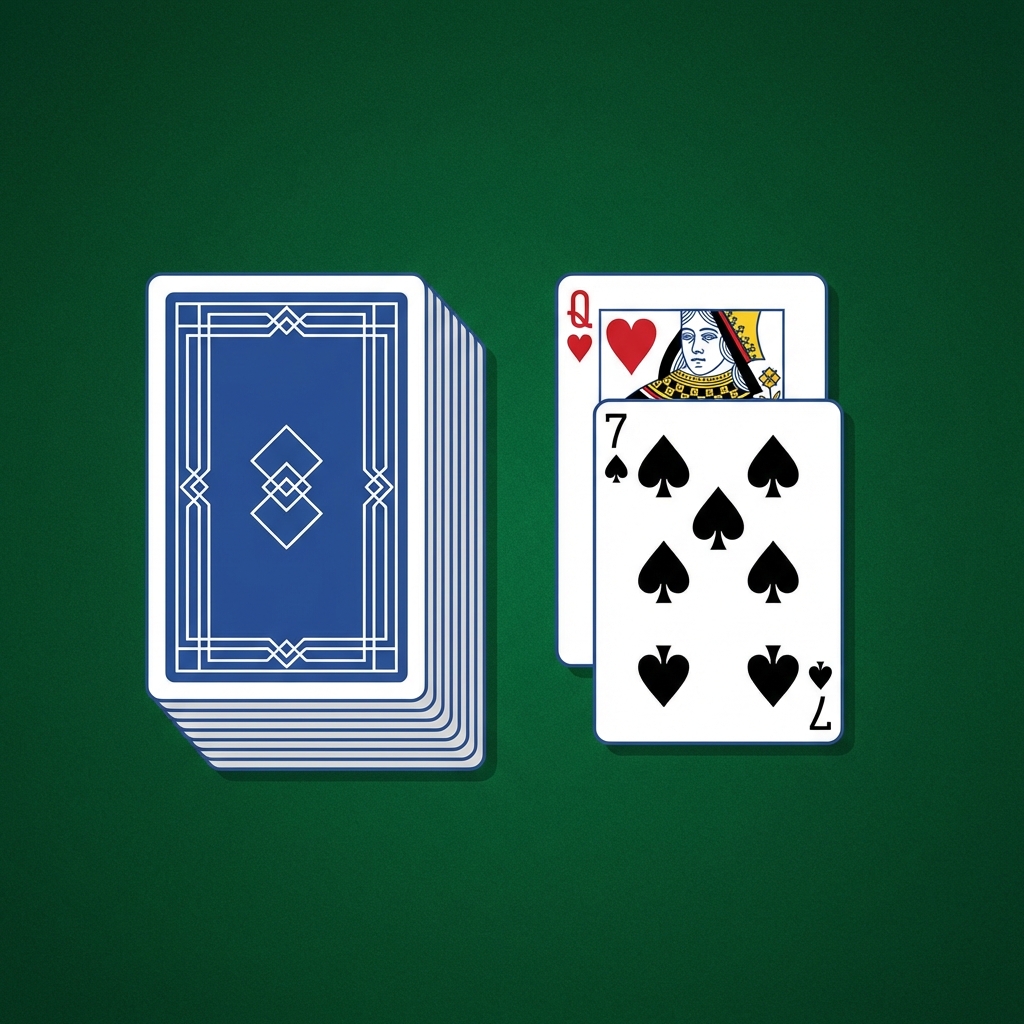
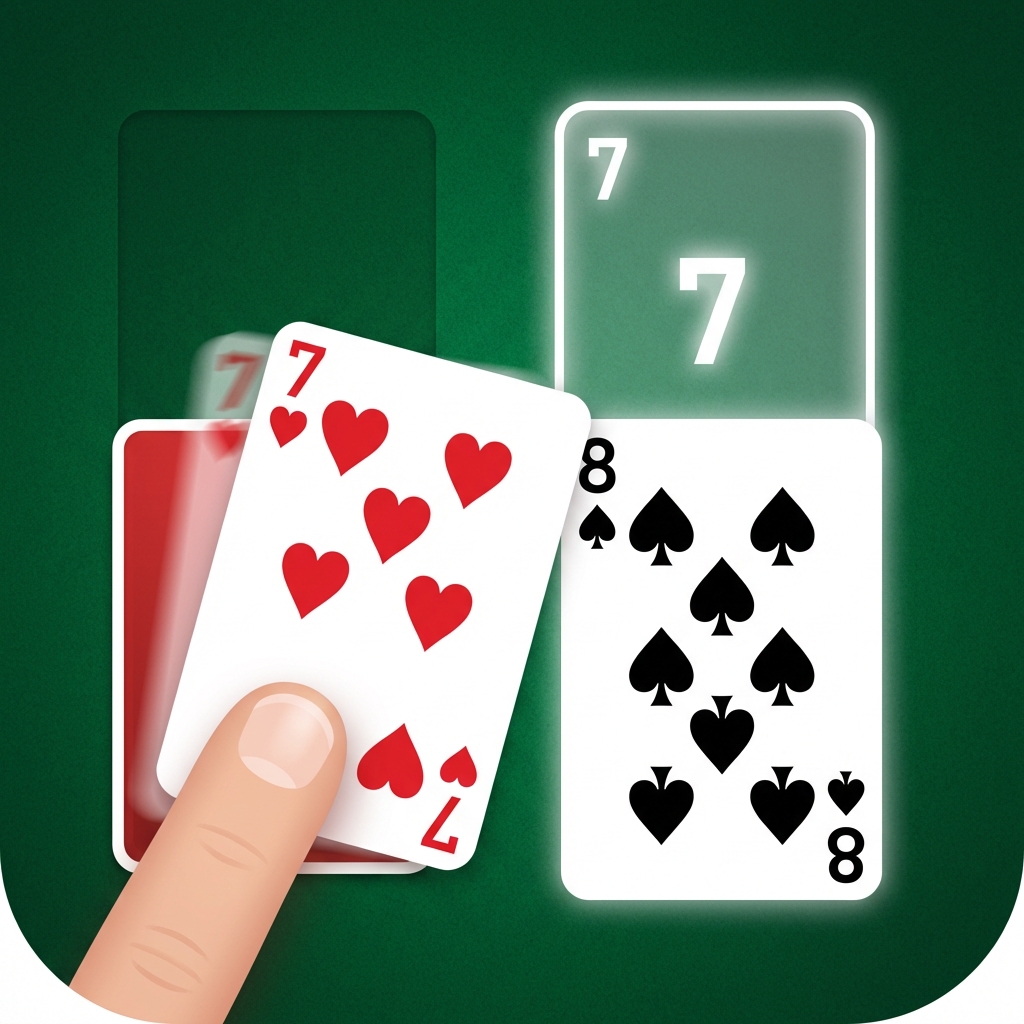
Remaining cards form the stock pile. In Turn One, you draw one card at a time to the waste pile. You can play the top waste card to tableau columns
or directly to foundations. When the stock is empty, click to recycle
the waste.
The Foundations
Build each of the four foundations from Ace to King, sorted by suit. Move cards to foundations by double-clicking or dragging. A
foundation pile is complete when it contains all 13 cards of its
suit, ending with the King.
Moving Cards
You can move any face-up card or properly-sequenced stack to another
column if the bottom card fits the sequence. Only Kings (or stacks starting with a King) can fill empty columns.
What Makes Turn One Different?
Klondike Solitaire comes in several variants based on how cards are
drawn from the stock:
Turn One (Draw 1): Draw one card at a time. More
forgiving, with approximately 80% of games theoretically winnable with perfect play.
Turn Three (Draw 3): Draw three cards at a time, only
the top is playable. More challenging, requiring deeper strategic planning.
This version plays Turn One with unlimited passes through the deck, giving you the best chance at victory while
maintaining the classic challenge. If you want a dedicated draw-1
focused table, try this Classic Klondike draw-1 game.
Scoring System (Microsoft Solitaire Rules)
My scoring follows the classic Microsoft Windows Solitaire system:
Action
Points
Move card to Foundation
+10
Move from Waste to Tableau
+5
Turn over hidden Tableau card
+5
Move from Foundation back to Tableau
-15
Pro tip: Moving cards from Waste → Tableau → Foundation
scores 15 points total (5+10), compared to 10 points for Waste → Foundation
directly.
History of Klondike Solitaire
The name "Klondike" first appeared in the 1907 edition of Hoyle's Games,
possibly referencing the famous Klondike Gold Rush of the late 1890s. In the United States and Canada, it became so dominant
that "Solitaire" alone typically means Klondike. In the UK, it's often called
"Patience" or "American Patience."
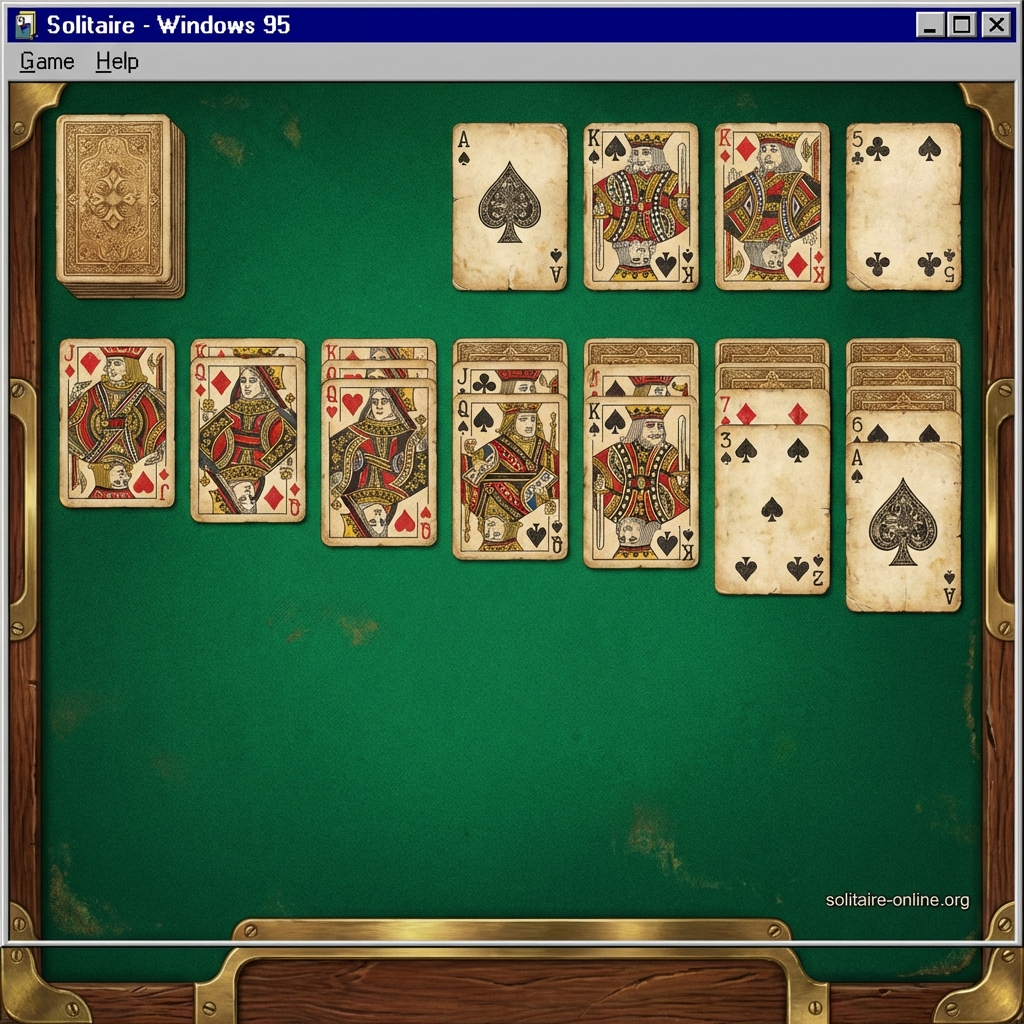
Microsoft's inclusion of Solitaire in Windows 3.0 (1990) transformed it
from a card-table pastime into a global phenomenon. Originally designed
to teach users how to use a mouse through drag-and-drop, it became,
according to Microsoft officials in 1994, "the most-used application for
Windows."
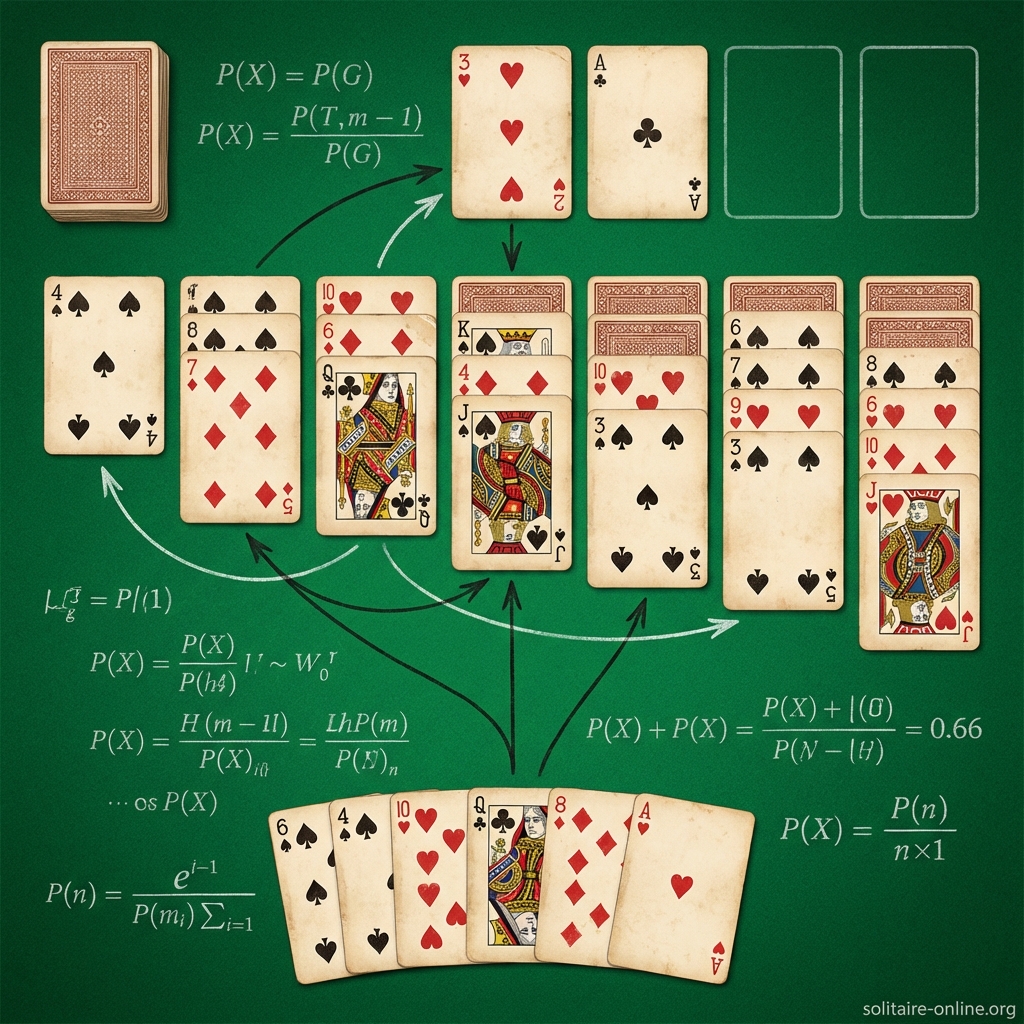
Probability and Winnability
Mathematician Persi Diaconis called calculating Klondike's exact win
probability "one of the embarrassments of applied probability." Research
suggests:
Theoretical maximum winnability (Turn One, optimal play): ~82%
Skilled human players typically achieve: 35-43% win rate
AI algorithms have achieved: 52% win rate in Turn One
mode
Not all games are solvable. Card distribution, King placement, and Ace
accessibility all affect whether a particular deal can be won.
Explore More Solitaire Resources
Dive deeper into the world of Klondike with my comprehensive guides on
strategy, history, and the science of the game.